
Integrated Web Search Capability Announced for ChatGPT
Direct search integration technically shifts how artificial intelligence platforms process and present current web data.
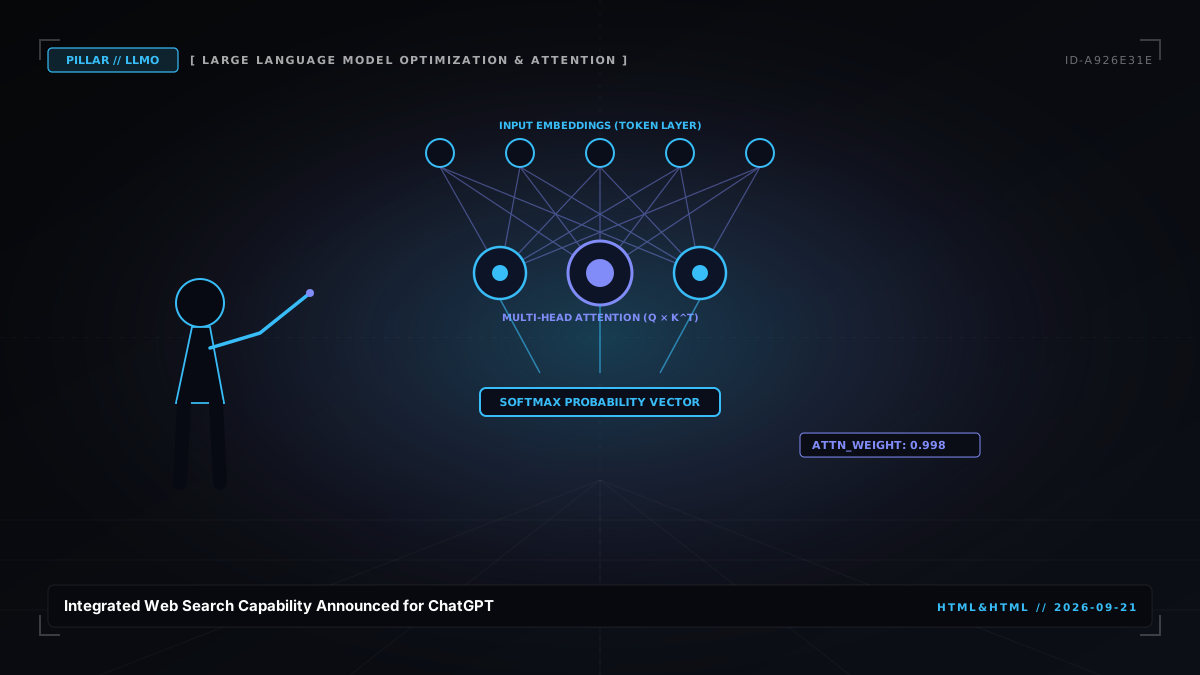
Executive Summary & Core Development
Developments in the AI ecosystem enable large language models to bypass static data limits and access live web sources. With this update, the platform gains the ability to crawl current web pages and link to relevant sources while generating answers to user queries.
This architectural shift combines traditional search engine indexing logic with generative AI synthesis, establishing a new technical layer in information retrieval processes.
Why It Matters to Webmasters & Digital Assets
Backing generative AI responses with real-time web data ensures users reach current information directly. For web administrators and platform engineers, this makes it essential that content is scannable, parsable, and referenceable by AI-driven systems.
Deep Technical Architecture & Protocol Shift
The integration of search capability leads to increased crawler-based requests, heightened importance of page load times, and shifting content structuring requirements. Server infrastructures must reconfigure robots.txt rules and API limits to manage rising bot traffic and optimize data extraction.
Multi-Model Retrieval Dynamics & Engine Comparison
Direct Impact Matrix Across the 9 Pillars
Production Code & Configuration Specification
Step-by-Step Engineering Audit & Action Protocol
- Analyze AI crawler request patterns in server access logs.
- Verify that the robots.txt configuration supports current crawling policies.
- Review on-page structured data (schema.org) usage.
This brief does not republish the external article; it is independent HTML&HTML analysis grounded in the source.
Original source ↗You have the context. Now measure your own website.
llms.txt, AI crawler access, GEO, AEO, LLMO, AAO, RAG, E-E-A-T and the technical foundation are evaluated in one scan.
Check My AI Visibility Free →